
For a long time, wellness travel was presented as a choice between doing nothing and following a strict programme. The most useful retreats now sit somewhere in the middle. They give you a reason to move, enough support to recover and enough freedom to feel that you are still on holiday.
Marrakech is especially well suited to that balance. The city brings together bright weather, Moroccan food, traditional hammam culture, outdoor space and easy access to experiences beyond the medina. A well-designed wellness retreat in Marrakech can include focused training in the morning, a slow lunch, time by the pool, recovery work and an evening that belongs to you.
The result should not be exhaustion disguised as self-improvement. It should be a week that helps you return home stronger, clearer and more rested.
Why Marrakech works for an active wellness retreat
The setting matters because a retreat should feel different from the routine you left behind. Marrakech provides contrast without requiring every day to become a complicated expedition.
You can train in a dedicated resort environment and still experience the city, Moroccan hospitality and the surrounding landscape. You can be active without spending the whole trip inside a gym. You can also recover without feeling confined to a treatment room.
For travellers arriving from the UK or Europe, Marrakech is practical enough for a shorter stay while still feeling like a genuine change of scene. That makes it suitable for a focused long weekend as well as a full seven-day programme.
Fitness retreat or wellness retreat: what is the difference?
A fitness retreat in Marrakech usually places structured training at the centre of the programme. Sessions may include strength work, conditioning, combat sports, running, yoga or mobility.
A wellness retreat may give equal weight to movement, sleep, food, relaxation and restorative experiences. In practice, the best option often combines both.
Before booking, ask yourself what you want to change:
- Do you want to build confidence in training?
- Are you trying to restart a routine?
- Do you need recovery after a demanding period?
- Are you travelling to learn a particular skill?
- Do you want active days without a rigid timetable?
- Are you coming alone, with a partner or with friends?
Your answer should shape the programme. A retreat designed for experienced athletes may not suit someone who wants movement and rest in equal measure. Equally, a spa-led break may feel too passive for a person who relaxes best after training.
What a balanced retreat day can look like
There is no single perfect timetable, but a good day has rhythm.
Morning: purposeful movement
Training earlier in the day can make the most of cooler conditions and create momentum without taking over the entire schedule. The session should have a clear purpose, whether that is technique, strength, conditioning or mobility.
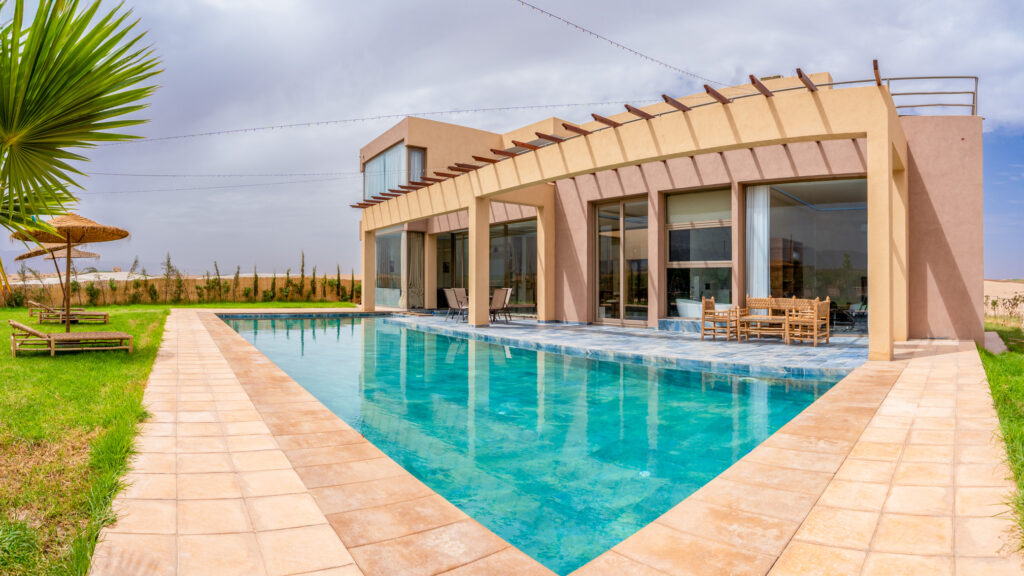
At Life Resort Marrakech, active guests can explore options including Muay Thai, MMA and BJJ and yoga. The right mix depends on experience, goals and recovery needs.
Midday: food, shade and recovery
Progress does not happen only during the workout. Hydration, a proper meal and time away from direct sun are part of the programme, not an interruption to it.
Lunch should support the day without making it feel clinical. Fresh ingredients, sufficient protein, vegetables and carbohydrates can sit comfortably alongside the pleasure of Moroccan flavours and eating together.
Afternoon: choose your own pace
An afternoon might include a swim, massage, nap, reading, mobility work or an experience outside the resort. This unstructured space is important. A retreat becomes difficult to sustain when every hour is assigned.
Evening: downshift
The final part of the day should help the nervous system settle. That might mean a relaxed dinner, gentle stretching, conversation or simply an early night. A retreat that promises recovery but fills every evening with compulsory activity is working against its own purpose.
Training should be adjustable, not intimidating
A strong retreat programme gives beginners and experienced guests meaningful versions of the same session. It should not rely on public exhaustion as proof that the training worked.
Before booking, ask:
- Are sessions adapted for different experience levels?
- Can you sit out or modify a session?
- Is coaching available for technique?
- How many hard sessions are scheduled consecutively?
- Is mobility or recovery work included?
- What equipment and training spaces are available?
This matters especially for combat sports. A first Muay Thai session should focus on stance, movement and simple combinations rather than trying to imitate an advanced fighter’s workload. Experienced guests, meanwhile, should be able to receive technical detail and an appropriate challenge.
Recovery is more than a massage
Treatments can be valuable, but recovery begins with the structure of the stay.
Sleep
Comfortable accommodation, a sensible evening schedule and enough time between the last session and bedtime all contribute to recovery. If the programme starts early, it should also make an early night possible.
Food and hydration
Training in a warm climate increases the importance of fluids and regular meals. Guests should know when food is served, what is available and how dietary requirements are handled.
Low-intensity movement
Walking, swimming and mobility work can reduce stiffness without adding another demanding workout. The goal is to leave the body better prepared for the following day.
Mental space
Constant notifications and decision-making can keep the mind in work mode even beside a pool. A retreat cannot force anyone to disconnect, but it can create an environment where putting the phone down feels natural.
The role of food in a wellness retreat
Retreat food sometimes becomes unnecessarily restrictive. A better approach is generous, fresh and suited to the activity level of the guests.
People training regularly need enough energy. They also want to enjoy where they are. In Marrakech, that can mean salads, grilled dishes, vegetables, fruit, grains, Moroccan flavours and shared meals that feel like part of the experience.
If food matters to your stay, review the venue’s restaurant and dining approach before booking. Ask about allergies or dietary preferences in advance, and confirm which meals are included in the retreat package.
Should you come alone or with friends?
Both can work.
Travelling alone removes the need to coordinate with someone else’s routine. A structured activity also makes it easier to meet people without forcing conversation.
Coming with a friend gives you a familiar training partner and someone with whom to share the quieter parts of the trip. The most useful question is not whether solo or group travel is better. It is whether the retreat leaves enough room for both connection and privacy.
Look for communal meals and shared sessions, but also check that you can choose a private room or take time alone when needed.
How long should a Marrakech wellness retreat be?
Three or four nights
A shorter stay can work as a reset. Keep the programme realistic. Travel, heat and a new environment all add load, so trying to compress a full transformation into a long weekend usually creates unnecessary pressure.
Seven nights
A week allows a more useful rhythm: arrival, gradual training, recovery, cultural experiences and time to absorb the change. It also gives beginners more time to develop confidence without rushing.
Longer stays
Longer programmes suit guests building a specific skill or habit. They require more variation and careful recovery planning to avoid physical and mental fatigue.
What to pack for an active retreat in Marrakech
Bring clothing that can handle training, warm afternoons and relaxed evenings.
A practical list includes:
- Lightweight training clothes
- Supportive trainers
- Swimwear
- Sunscreen and a hat
- A reusable water bottle
- Comfortable evening clothes
- Any personal training equipment requested by the venue
- Medication and basic travel essentials
- A light layer for cooler mornings or evenings
If you plan to train Muay Thai or another combat sport, ask whether gloves, wraps and protective equipment are supplied or should be brought with you.
How to choose the right retreat
Marketing photographs rarely answer the questions that determine whether a retreat is right for you. Use this checklist:
- What is the main purpose of the programme?
- How many training sessions are scheduled each day?
- Can sessions be adapted or skipped?
- Which meals and activities are included?
- What recovery facilities are available?
- What qualifications or experience do the coaches have?
- Is the group size stated?
- How much free time is protected?
- What accommodation options are available?
- What is the cancellation policy?
The answers should be clear before you pay. A retreat should reduce stress, not begin with uncertainty.
Frequently asked questions
Do I need to be fit before joining a fitness retreat?
Not necessarily. Choose a programme that explicitly supports your current level, and share injuries or limitations before arrival. A responsible coach should be able to adapt sessions.
Can beginners train Muay Thai in Marrakech?
Yes, provided the programme offers beginner-appropriate coaching. Early sessions should focus on safe technique, movement and confidence rather than intensity alone.
Is a wellness retreat suitable for solo travellers?
It can be particularly suitable because shared sessions and meals create natural opportunities to meet people. Check the room options and how much independent time is included.
What is the best time of year for a Marrakech retreat?
The best period depends on the activities and your temperature preference. Ask how the programme changes in hotter months and whether training areas are shaded or indoors.
Can I combine training with sightseeing?
Yes. A balanced schedule should leave space for Marrakech itself. Avoid programmes that make every optional activity feel compulsory.
Build a retreat around how you want to feel
The right wellness retreat in Marrakech should have a clear purpose without turning the holiday into another performance target. Train with attention. Eat properly. Recover before you are exhausted. Leave some hours empty. Experience Morocco rather than only viewing it through the window of a gym.
Life Resort Marrakech is designed around that combination of movement and space to slow down. Explore the resort’s current retreat options, review the accommodation and contact the team with questions about training level, meals and availability.
The most useful result is not a dramatic promise. It is returning home with more energy, a clearer routine and a version of wellbeing that still works after the suitcase is unpacked.