
There was a time when the point of a holiday was to do as little as possible. Find a sunbed, order something cold and let the days blur together.
That kind of break still has its place. But a different sort of trip is gaining ground in 2026: the skillcation. Instead of returning home with only photographs, travellers are choosing holidays that leave them with something they can keep — a new ability, a deeper interest or the beginning of a practice that continues long after the flight home.
Muay Thai fits that idea almost perfectly. It is physical without being mindless, technical without becoming inaccessible and demanding enough to pull your attention away from everything waiting on your phone. Add Marrakech sunshine, proper recovery, good food and enough quiet between sessions, and a training trip starts to feel less like an ordinary fitness holiday and more like a genuine reset.
What is a skillcation?
A skillcation is a holiday built around learning. The destination still matters, but the trip has a second purpose: you might learn to surf, cook, paint, ride, practise yoga or begin a martial art. The important part is active participation. You are not simply watching someone else do something well. You are giving yourself enough uninterrupted time to become a beginner again.
That shift makes sense. Modern life leaves many people with plenty of information and very little focused practice. We watch tutorials, save routines and promise ourselves that we will start when work becomes quieter. A skill-focused holiday removes the usual excuses. The time is already protected. The environment is new. The people around you understand why you are there.
It also changes how a destination feels. Marrakech becomes more than somewhere you visit. It becomes the place where your stance finally made sense, where you learned to breathe through a difficult round or where a movement that felt impossible on Monday began to click by Friday.
Why Muay Thai works so well as a learning holiday
Muay Thai is often called the art of eight limbs because it uses punches, kicks, knees and elbows. That description is accurate, but it does not explain why the sport becomes so absorbing. At its heart, Muay Thai is a study of balance, timing, distance and calm decision-making under pressure.
A beginner can learn something useful in the first session: how to stand, how to move, how to throw a straight punch or turn the hip into a kick. An experienced athlete can spend years refining the same details. That combination makes it ideal for a short training break. You do not need to master the sport for the week to feel worthwhile.
At Life Resort’s Muay Thai training space in Marrakech, the aim is not to turn every guest into a fighter. It is to meet people at their level, build strong foundations and give each session a clear purpose. For some guests, that means learning their first combination. For others, it means sharpening technique, improving conditioning or getting useful rounds away from their usual gym.
You do not need to arrive fit
One of the biggest barriers to a training holiday is the feeling that you should get fit before you go. It is the same logic that makes people think they need to become flexible before trying yoga. In practice, waiting until you feel “ready” can become a way of never beginning.
A sensible first week is scalable. You can learn technique at a controlled pace, take longer rests, work on pads without hard sparring and build volume gradually. Good coaching should adapt the session to the person in front of it, not force every guest through the same template.
If you already train, bring your experience. If you do not, bring curiosity. Fitness improves through the week, but the more important gain is confidence: understanding where to put your feet, how to hold your guard and what your body is capable of when it receives clear instruction.
What a day can feel like
The best active holidays avoid turning every hour into another obligation. Training matters, but so does the space around it.
A morning might begin slowly: breakfast, coffee and enough time for the body to wake up. Training then gives the day its centre. Afterward, there is food, a shower and the satisfying quiet that follows work done properly. The afternoon might mean the pool, reading in the shade, a treatment in the spa or simply doing very little.
If you want more movement, you can add strength work in the indoor weight room, a lighter mobility session or yoga for recovery. If you want to explore, Marrakech and the landscape around it offer more than enough contrast. The point is not to collect sessions. It is to create a rhythm you can sustain for the whole stay.
The learning curve: what changes across a week
The first session is usually information-heavy. Your stance feels unfamiliar. Your feet and hands appear to have separate plans. You think so hard about one instruction that you forget the previous three.
Then repetition begins to do its work.
By the middle of the week, movements stop feeling completely new. You recognise combinations. Your breathing becomes less frantic. You begin to understand why the coach is asking for a small adjustment rather than merely copying the shape of the technique.
By the final sessions, you may not look like a professional — nor should you expect to — but you have a framework. You know what to practise next. You have felt the difference between forcing a movement and timing it properly. That is the real value of a skillcation: it gives you a beginning strong enough to continue.
Training is only half of the formula
Progress does not happen only while the pads are being held. It also happens while you eat, sleep and recover.
This is where a resort-based training stay has an advantage over squeezing sessions into an ordinary city break. Your room, food, pool and training spaces are close together. There is less travelling between each part of the day and less temptation to treat recovery as an afterthought.
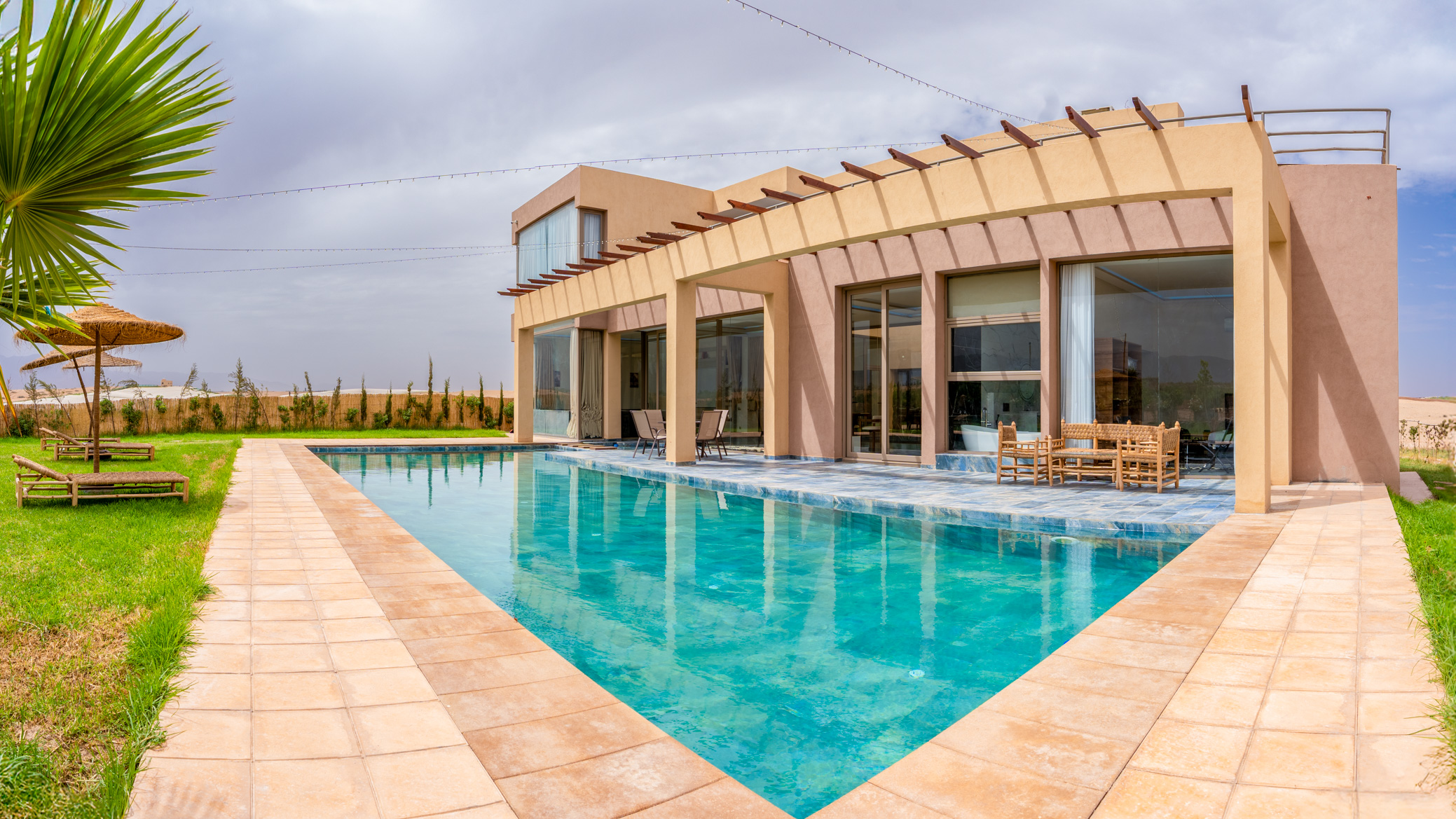
Fresh meals matter because repeated training asks more of the body than one impressive session. The restaurant at Life Resort keeps food close to the rhythm of the stay: eat well, train, recover and come back to the table. Sleep matters for the same reason. Staying in the resort’s private Marrakech accommodation means the day can wind down without another journey through the city.
Is Muay Thai suitable for solo travellers?
Yes — and a training holiday can be one of the easiest ways to travel alone.
Solo city breaks sometimes require a surprising amount of decision-making. Where will you go today? Where will you eat? How will you fill the evening? Training gives the day a natural structure and creates conversation without forcing it. You already share a reason for being there with the people around you.
You can still take space when you want it. Train with others, eat at your own pace, read by the pool and decide how social the rest of the day should be. The combination of shared activity and private downtime works particularly well for people who want to travel alone without feeling isolated.
How long should a Muay Thai training holiday be?
Three or four days can be enough for a first taste, particularly if Marrakech forms part of a longer Morocco trip. A full week gives the experience more shape. You have time to settle, train more than once, recover properly and notice improvement without rushing.
Seven days also makes it easier to balance training with the destination. You can have a serious session in the morning and still keep an afternoon free for the medina, the Atlas foothills or one of the resort’s Marrakech experiences.
For guests who prefer a simple structure, Life Resort’s seven-day retreat options bring accommodation, training, food and recovery into the same stay. That does not mean every minute is programmed. The value is having the important pieces close enough that the week feels easy to inhabit.
What to pack
You do not need an athlete’s luggage allowance. Keep it practical:
- Light training clothes that dry quickly.
- Enough tops or shorts to rotate between sessions.
- Hand wraps if you own them.
- Boxing gloves if you strongly prefer your own pair; otherwise ask what is available before travelling.
- A reusable water bottle.
- Trainers for strength work or general conditioning.
- Sandals or easy shoes for the rest of the resort.
- Sun protection and a hat.
- One warmer layer for cool mornings or evenings outside summer.
If you are unsure about equipment, contact the resort before you fly. It is better to ask one clear question than pack half a fight shop for a beginner week.
How to make the week work for you
Choose consistency over heroics
The session that leaves you unable to move for two days is rarely the most useful one. Start at a level that allows you to return. A week rewards steady participation more than a dramatic first morning.
Tell the coach what you need
Mention injuries, previous experience and what you want from the trip. “I am completely new” is useful information. So is “I train twice a week and want to improve my defence.” Clear goals make coaching more specific.
Leave room for Marrakech
You travelled for the skill, but you also travelled. Eat Moroccan food. See the evening light change. Walk through the medina. Spend a quiet afternoon near the pool. The contrast helps the training feel sharper rather than turning the holiday into an endurance test.
Write down what you learned
A few notes after each session can preserve details that disappear once you are home: a stance cue, a combination, a reminder to relax the shoulders. You are building a practice, not simply collecting tired muscles.
Skillcation or wellness retreat?
The useful answer is that it can be both.
Wellness does not have to mean avoiding effort. For many people, focused movement is what allows the mind to become quiet. You train hard enough to be present, then recover in an environment that does not immediately push you back into noise.
A Muay Thai skillcation offers a concrete learning goal. A wellness retreat offers the conditions that make the learning sustainable: sleep, food, space, warmth and recovery. Put the two together and the holiday has direction without becoming rigid.
Frequently asked questions
Can complete beginners train Muay Thai at Life Resort?
Yes. Training can be adapted for beginners as well as people with previous experience. Let the team know your level and any injuries before the first session.
Do I have to spar?
No. Technique, footwork, pad work and conditioning can all be trained without hard sparring. Discuss your comfort level with the coach.
Can I combine Muay Thai with yoga, gym work or spa recovery?
Yes. The advantage of staying at a training and wellness resort is being able to combine different parts of the week without long journeys between them. Keep the overall load sensible.
Can I visit Marrakech during the retreat?
Yes. A well-paced week should leave room to explore. Plan the more demanding excursions around your training and recovery rather than trying to do everything in one day.
How do I check current training availability?
Use the Life Resort contact page to share your dates, experience level and what you would like to include. The team can confirm current arrangements without changing or committing you to a booking.
Come home with more than a tan
The appeal of the skillcation is simple: rest feels different when it sits beside meaningful effort.
You still get the sun, the pool, the meals and the distance from ordinary life. But you also get the moment a kick lands cleanly on the pad, the satisfaction of understanding a combination and the surprising calm that follows an hour of complete attention.
Marrakech gives the trip colour and contrast. Muay Thai gives it purpose. Life Resort brings the training, recovery, food and accommodation close enough for the week to breathe.
You do not need to arrive as a fighter. You only need to arrive willing to learn.