
Ask anyone who trains seriously about recovery and you’ll hear the usual list: sleep, food, stretching, maybe a sauna or an ice bath. What rarely comes up — because most people outside Morocco don’t know it — is the hammam, a centuries-old steam-and-cleanse ritual that happens to be one of the most restorative things you can do to a tired body.
If you’re training in Marrakech, the hammam isn’t a tourist box-tick. It’s a proper recovery tool. Here’s what it is, why it works, and how to use it around hard sessions.
What is a hammam?
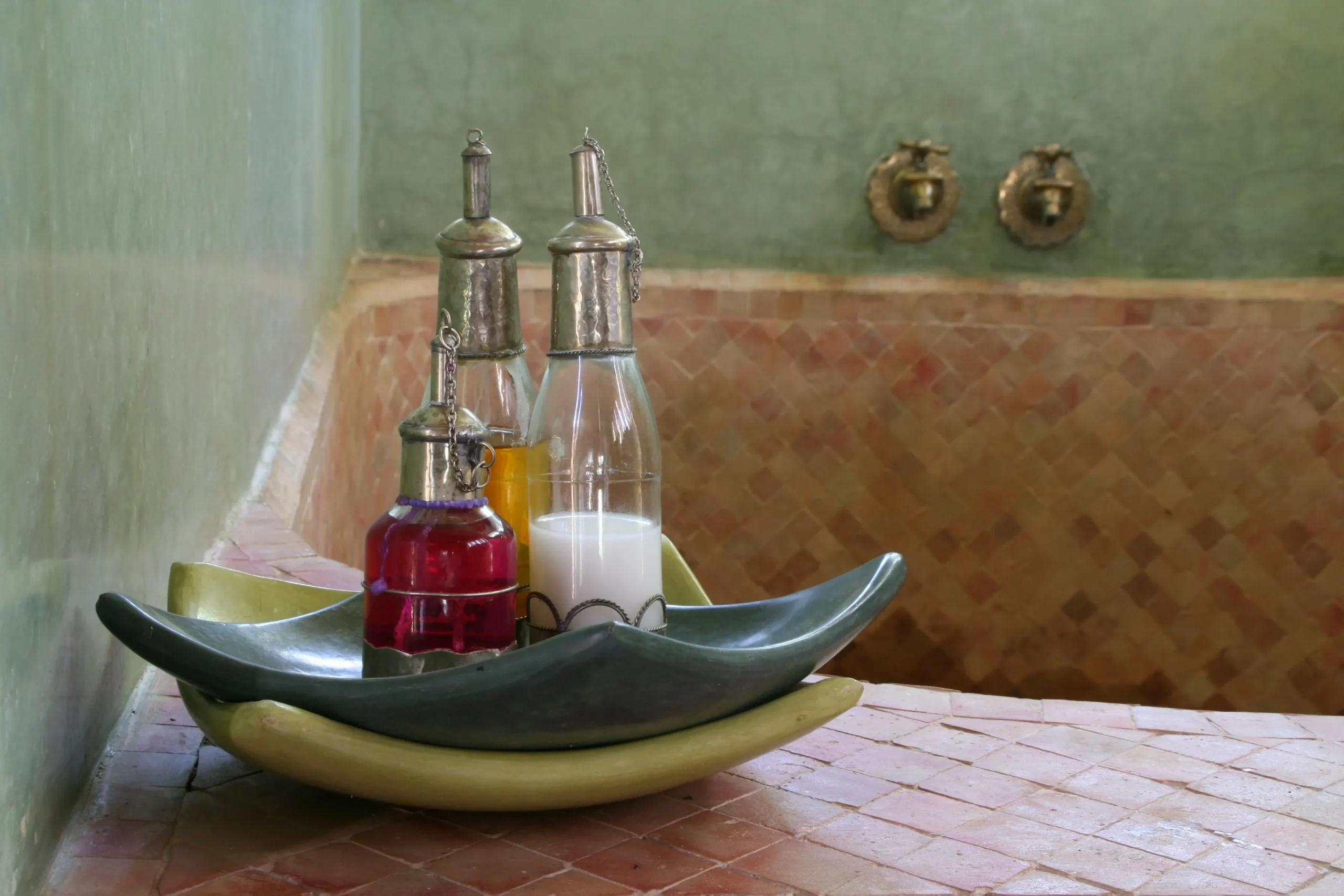
A hammam is a traditional bathhouse and steam ritual, woven into Moroccan life for generations — historically a weekly practice, part hygiene, part wellbeing, part social occasion. The ritual moves through heat and steam to open the pores, a cleanse with olive-based black soap, a deep exfoliation with a coarse kessa glove, and often a mineral-rich clay (ghassoul) and an oil finish. You emerge scrubbed, warmed through and genuinely relaxed.
Why it works as recovery
- Heat and steam relax muscles.
The warmth eases the tension and stiffness that build up over a hard training week — similar in spirit to why athletes use saunas and steam rooms. - It supports circulation.
Heat and vigorous exfoliation stimulate blood flow, part of why you feel loose and refreshed afterwards. - Deep relaxation aids sleep.
The ritual calms the nervous system — and better sleep is where real recovery actually happens. - Skin left genuinely clean.
A week of sweat, mats and sunscreen takes a toll; the exfoliation leaves skin properly reset. - The mental reset.
Slowing down for a couple of hours, phone away, is its own kind of recovery after intense training.
The ritual, step by step
| Step | What happens |
|---|---|
| Warm & steam | Time in the heat to open the pores, warm the muscles and start to unwind. |
| Black soap | Olive-based beldi soap is worked into the skin to soften and prepare it. |
| The scrub | A coarse kessa glove exfoliates deeply — the signature step, removing what daily washing can’t. |
| Clay & rinse | Mineral-rich ghassoul clay, then a rinse, leaving skin smooth and clean. |
| Oil & rest | A nourishing oil finish, then rest — often with mint tea to rehydrate. |
How to use it around training:
A hammam sits perfectly on a recovery day, or in the evening after a hard session, when heat and relaxation do the most good. Give it time — this is a two-hour unwind, not a quick shower. By mid-week, it’s the reason your body still feels good.
What to expect your first time
If you’ve never done it, set aside the image of a silent Western spa — a traditional hammam is warmer, more hands-on and more of a ritual. Come ready to relax, let the steam and the scrub do their work, and hydrate well afterwards. Most people finish their first one already planning the next.
Frequently asked questions
Is a hammam actually good for recovery, or just relaxing?
Both. The heat relaxes tired muscles and supports circulation while the ritual calms the nervous system and aids sleep — all of which help you recover between hard sessions. It feels good and does good.
How often should I have one during a training week?
Once or twice across a week works well — ideally on a recovery day or the evening after a hard session. It’s restorative rather than something you’d do daily.
What do I need to bring or wear?
Keep it simple — you can wear swimwear, and hydrate well before and after. If you’re doing a treatment version, everything you need is usually provided. Ask ahead and we’ll advise.
Is the scrub really that vigorous?
The kessa exfoliation is thorough — that’s the point, and it’s why your skin feels so different afterwards. It’s firm but not painful, and it’s what sets a hammam apart from an ordinary steam room.
Can I combine the hammam with a massage?
Often yes — many people follow the hammam with a massage or oil treatment for a fuller recovery session. It’s a natural pairing after a hard training block.
General wellbeing information, not medical advice. If you have a health condition, check with a professional before heat-based treatments.