
A decade ago, “wellness holiday” meant one of two things: a spa hotel where you did very little, or a strict retreat where you were told what to eat and when to breathe. Both had their place. Neither is what most people are actually booking now.
Because something has shifted. Wellness travel has become one of the largest and fastest-moving forces in the entire travel industry, and the kind of trip people want has changed with it. This is a long read, because it’s worth understanding properly: what the wellness traveller of 2026 is really after, why the old formats no longer satisfy them, and how a training-and-wellness retreat in Marrakech ended up sitting right at the intersection of nearly every one of this year’s biggest trends. Not by chasing them — by being built that way from the start.
First, the scale — because it’s genuinely staggering
It’s tempting to treat “wellness” as a soft, fuzzy category. The numbers say otherwise. The global wellness tourism market was estimated at around $990 billion in 2025, and is projected to reach roughly $2.4 trillion by 2035 — growing at nearly 9–10% a year, far faster than travel as a whole. The broader wellness economy it sits inside hit a new peak of $6.8 trillion in 2024, having doubled in size in just over a decade.
And this isn’t a fringe of eccentric health tourists. Research into higher-income travellers found that 44% took a wellness trip in 2025, and 58% had one planned for 2026. People are now prioritising this kind of spending over clothing, over entertainment, over a lot of the things holidays used to be about. Millennials and Gen Z in particular spend disproportionately on wellness compared with other discretionary categories — and there’s every sign that continues.
The one line that matters most for anyone in this space:
The wellness traveller of 2026 is happy to spend on intentional, specific offerings — and has little patience for generic wellness programming. “A spa and a smoothie” no longer cuts it. People want a trip that actually does something, built around a real idea, in a real place. Hold that thought — it explains everything below.
Trend 1: Fitness holidays grew up into “performance tourism”
The biggest single shift is that the casual fitness holiday has evolved into something more serious and more satisfying. Instead of a vague “active retreat,” travellers are increasingly booking trips organised around a genuine physical goal — training with intent, improving a skill, coming home measurably better than they left. The industry has started calling it performance tourism, and it’s one of the defining wellness trends of the year.
At the luxury end, that means clinical-grade athletic testing — VO₂ max assessments, gait analysis, specialised coaching. But strip away the lab equipment and the underlying desire is simple and universal: people want to train on holiday, properly, with real coaching, and feel a sense of progress and capability at the end of it. Running camps, strength residencies, sports-specific training weeks — the format is exploding because it delivers something a beach week never can: measurable progress, a personal breakthrough, and an identity rooted in what your body can do.
This is where a Muay Thai session on the pads, a strength block in the indoor weight room, or a week of coached training in the sun stops being a niche and becomes exactly what a huge, growing group of travellers is now actively searching for. The instinct behind “performance tourism” and the instinct behind booking a training holiday in Marrakech are the same instinct.
Trend 2: Recovery became the headline, not the afterthought
Here’s the twist that separates 2026 from the bootcamp era. All that training has been matched by an equal, arguably bigger, move in the opposite direction — toward recovery, sleep and nervous-system regulation as the actual point of the trip.
Sleep tourism — travel designed around getting genuinely better rest — is shaping up to be one of the single biggest travel trends of the year. Dedicated sleep programmes are appearing in resorts everywhere, built on the now-mainstream understanding that poor sleep carries a real biological cost, and that uninterrupted, high-quality rest is reason enough on its own to travel.
Alongside it, the industry is shifting, in its own words, “from performance-driven wellness toward nervous system regulation” — reducing load rather than adding it: less sleep debt, less inflammation, less stress, less tension in the body.
Put those two trends side by side — train harder and recover deeper — and you arrive at the format that’s quietly winning: not the grind, not the spa-only stay, but the balance of the two. Effort matched by intentional recovery. Which happens to be the exact philosophy a good training resort is built on: hard sessions in the morning when the body performs, then genuine rest — the spa, pool, sleep, food and quiet accommodation — so you can go again. The recovery isn’t the reward for the training. It’s half of what makes the training work.
Trend 3: Heat, cold and the return of the ancient rituals
One of the most-cited wellness trends of 2026 is “elemental” recovery — deliberate exposure to heat, cold, steam and water. Contrast therapy, saunas, cold plunges, prized now for their documented effects on circulation, inflammation and nervous-system regulation. Sauna bathing in particular has gone from niche to mainstream faster than almost any wellness practice in memory.
What’s striking is how old most of this actually is. The wellness world is rediscovering, with great excitement, things various cultures have done for centuries. And Morocco has one of the very best examples already woven into daily life: the Moroccan hammam. The steam, the cleanse, the deep exfoliation, the heat — it’s a centuries-old recovery ritual that lines up almost perfectly with what the 2026 traveller is now seeking out and paying a premium for elsewhere. Here, it isn’t an imported trend. It’s simply what recovery has always looked like.
The pattern worth noticing: nearly every “new” 2026 wellness trend — heat therapy, real food over cleanses, movement plus rest, calm over stimulation — is something Morocco and a well-run resort were already doing. The trends are catching up to the place, not the other way around.
Trend 4: “Active recovery” beats both extremes
Travel media spent this year describing a specific sweet spot again and again: retreats that combine movement with genuine recovery — “balanced fitness with intentional recovery,” in one widely-shared phrasing. Guided activity and strength-building on one hand; rest, spa and restoration on the other. Not the punishing bootcamp. Not the passive spa week. The thing in between, that leaves you both accomplished and restored.
That can mean hard conditioning through a HIIT class one day, then yoga and mobility when the body needs something quieter. For people who want to broaden their training, MMA & BJJ add grappling and technical work without turning the whole trip into a fixed camp.
There’s also a quiet but important detail in the trend reports: a decisive move away from strict diets and toward enjoyable, sustainable habits — food you look forward to, not a punishment cleanse. The modern wellness traveller wants to come home having eaten well, not having survived on juice. Fresh, real, nourishing food is now a feature, not a compromise. Anyone who’s eaten a proper Moroccan meal will understand why this suits the destination.
At Life Resort, fresh Moroccan and healthy cooking sits naturally inside that rhythm. If the nutrition side interests you, read more about how Moroccan food fuels a week of hard training.
This “active recovery” middle ground is, almost word for word, how a training-and-wellness resort already describes itself: train as hard or as gently as you like, recover properly, eat real food, leave better than you came. The market spent 2026 articulating a philosophy that places like this were already running.
Trend 5: Calm, unplugged, and away from the noise
The final thread ties the rest together. As daily life gets more digitised and more relentless, a growing number of travellers are defining wellness as the absence of constant stimulation.
Hilton’s research found 27% of travellers planned to cut their social-media use on holiday; one luxury rental platform reported a 17% jump in searches for unplugged, “tech-lite” properties. Resorts are deliberately stripping away screens and notifications to make room for unstructured time in nature and calm surroundings.
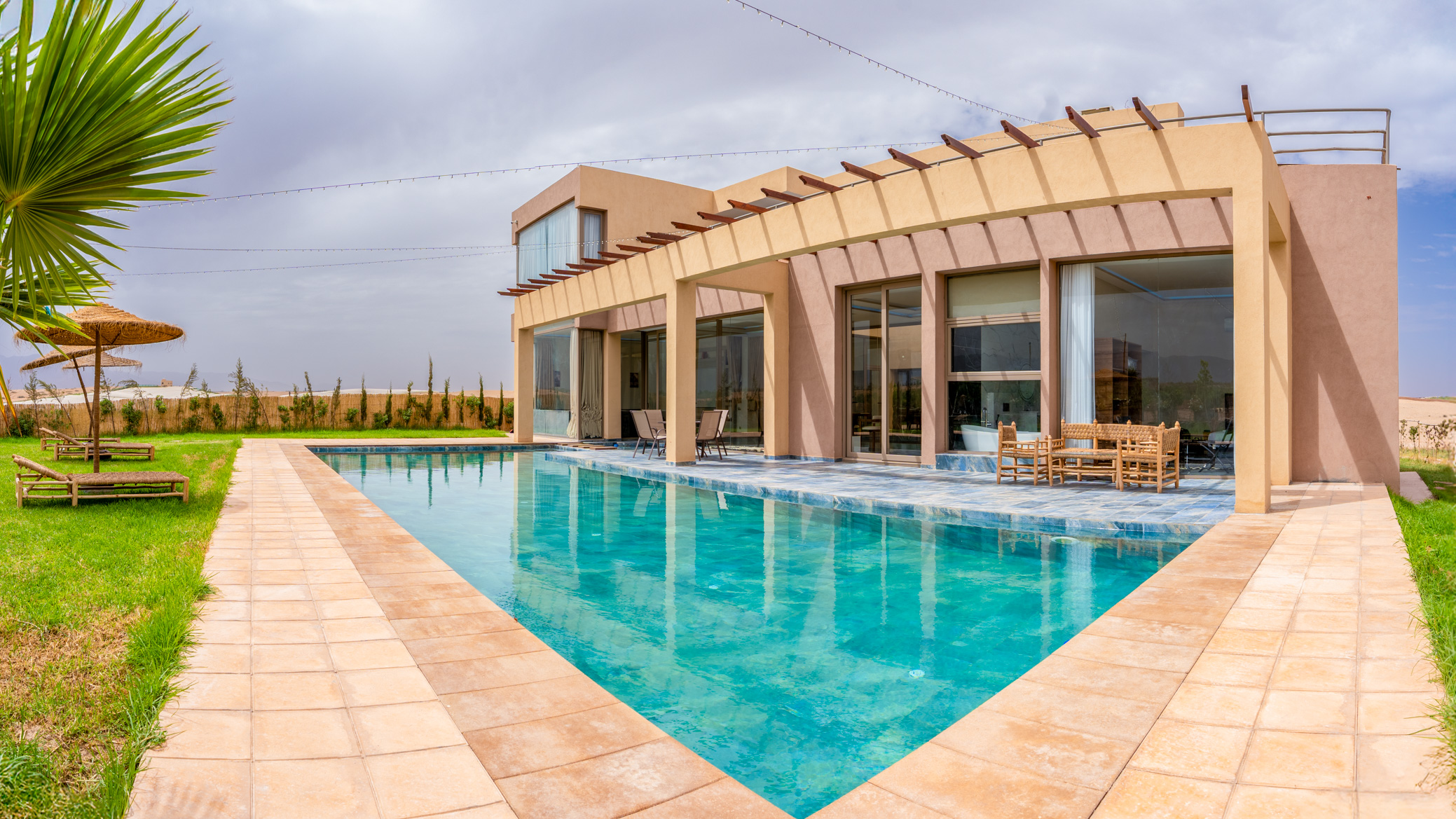
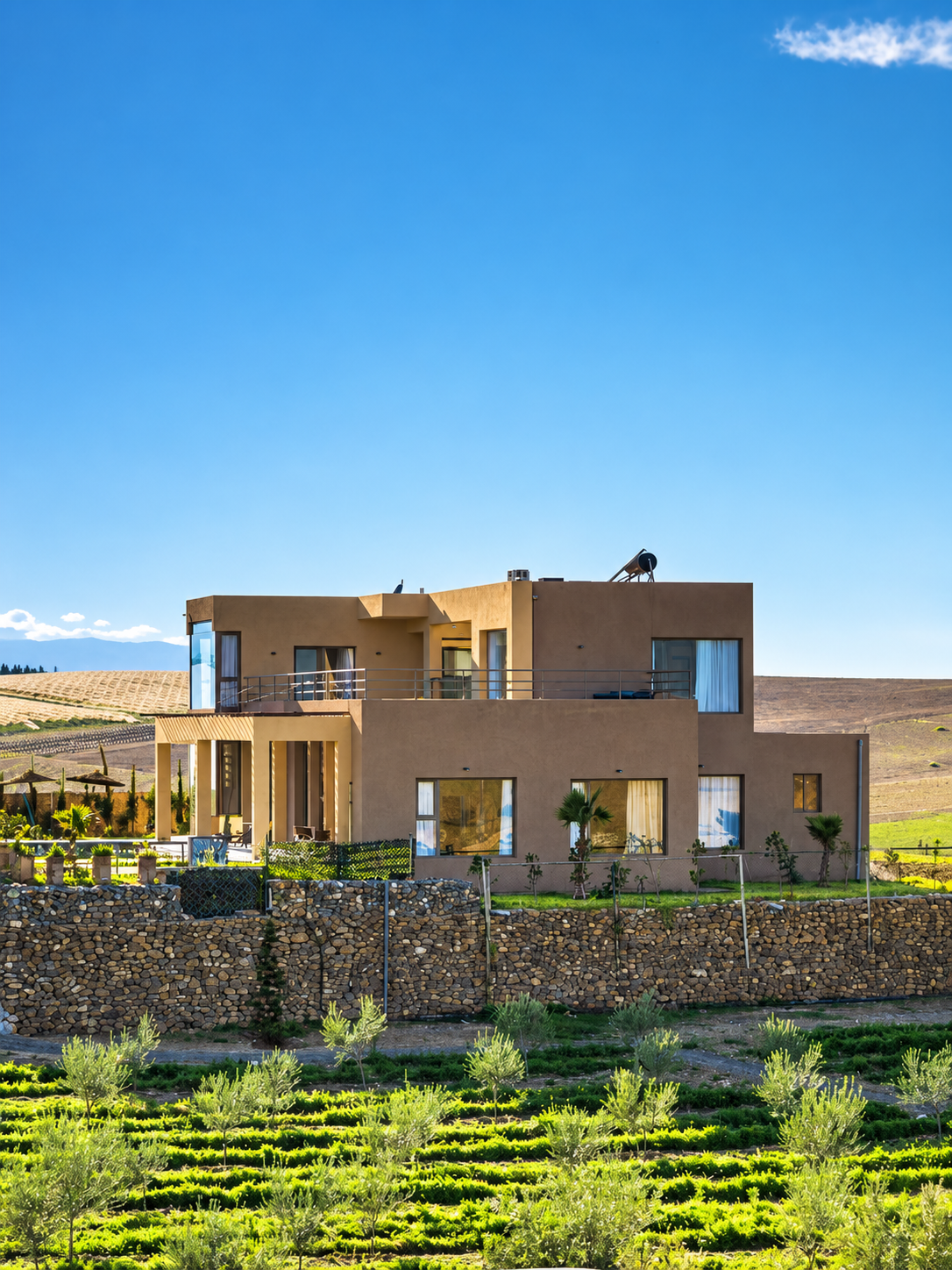
This is where location becomes strategy. A resort set out in the countryside — by a lake, with the Atlas foothills on the horizon, away from the crush and noise of the city — isn’t just pleasant. It’s precisely the “raw, untamed, calm environment” the 2026 traveller is now actively seeking, with the city still close enough for a day trip when they want it. Space and quiet have become a feature people will pay for. Some destinations are engineering it. A few places simply have it.
That quieter setting doesn’t mean doing nothing. Guests can build local experiences around the slower days, then return to the resort rather than spending the whole trip inside the city. For more on the setting itself, read about Lalla Takerkoust and the quieter side of Marrakech.
Why Marrakech, and why now
Step back and the picture is clear. The wellness traveller of 2026 wants: to train with a purpose, to recover deeply and sleep well, to experience authentic heat-and-steam rituals, to strike a balance between effort and rest, to eat real food rather than endure a cleanse, and to do all of it somewhere calm, natural and unplugged — without a punishingly long flight.
Marrakech answers nearly all of it at once. It’s a short hop from the UK and Europe — 3 to 4 hours — with reliable winter sun when home is grey. It has the hammam tradition built into its culture. It has the countryside, the mountains and the space, a short drive from one of the world’s great cities. And a resort out at Lalla Takerkoust, by the lake and the Atlas foothills — offering Muay Thai, boxing, MMA & BJJ, strength in the weight room, HIIT, yoga, a spa, fresh Moroccan and healthy food, and a quiet private setting — reads less like a list of amenities and more like a checklist of everything the 2026 wellness traveller says they want.
That’s not a coincidence engineered to catch a trend. It’s what happens when a place is built around a genuine philosophy — train hard, recover properly, eat well, slow down — and the rest of the world spends a few years arriving at the same conclusion.
What this means if you’re thinking about a trip
If any of the above resonated, you’re not chasing a fad — you’re part of the single biggest shift in how people travel to feel better. And the practical takeaways are simple:
- Look for balance, not extremes. The trip that leaves you best is the one that pairs real training with real recovery — not all grind, not all spa.
- Treat recovery as the point, not the perk. Sleep, the hammam, rest days and good food are what make the effort worth it. Choose somewhere that takes them seriously.
- Value the setting. Calm and space aren’t a bonus anymore — they’re a big part of why you come home restored. Somewhere quiet, with the option of the city nearby, is the sweet spot.
- Don’t over-fly for it. You don’t need Bali or Thailand to get all of this. Marrakech delivers it a short flight away.
- Eat well. The best wellness food isn’t a cleanse. Fresh, real cooking is part of the restoration.
The quiet conclusion
The wellness industry will keep adding technology — biological-age testing, NAD+ drips, sleep-tracking rooms. Some of it is genuinely useful; some is theatre. But underneath the gadgets, the trends of 2026 all point back to something old and simple: move your body with purpose, rest it properly, eat real food, and spend time somewhere calm. People are travelling across the world and spending fortunes to rediscover that.
The good news is you don’t have to go far, or spend a fortune, to find it. Sometimes it’s a training week and a hammam and a long dinner under the Atlas mountains, a short flight from home. The future of wellness travel, it turns out, looks a lot like a quiet resort outside Marrakech — where it’s been the plan all along.