
There’s a myth that eating for training means suffering — bland chicken, measured rice, food as medicine. Anyone who’s trained seriously knows the opposite is true: the better and more real your food, the better you perform and recover. And it turns out that traditional Moroccan cooking, built on fresh vegetables, lean grilled protein, slow-cooked stews and simple whole ingredients, is quietly some of the best training fuel around.
If you’re doing a training week in Marrakech — whether your focus is Muay Thai, MMA or BJJ, HIIT or strength work in the indoor weight room — this is a genuine advantage most people don’t think about. Here’s how to eat to fuel hard sessions and real recovery — the enjoyable way.
The principles: what fuelling training actually needs
Strip away the noise and eating to train comes down to a few simple things:
- Carbohydrates to fuel your sessions and refill energy stores — the main driver of whether you feel strong or flat.
- Protein to repair and rebuild what training breaks down.
- Healthy fats for sustained energy and joint health.
- Vegetables and fruit for the vitamins, minerals and recovery support that keep you healthy across a hard week.
- Hydration — often the difference between a good session and a sluggish one, especially in the warmth.
The good news: Moroccan food naturally hits nearly all of these without you having to think like a nutritionist.
Why Moroccan food is quietly perfect for it
-
Real carbohydrates
Couscous, bread, rice and root vegetables give you the slow-release energy that fuels double sessions — the same principle fighters rely on, just tastier.
-
Lean, simple protein
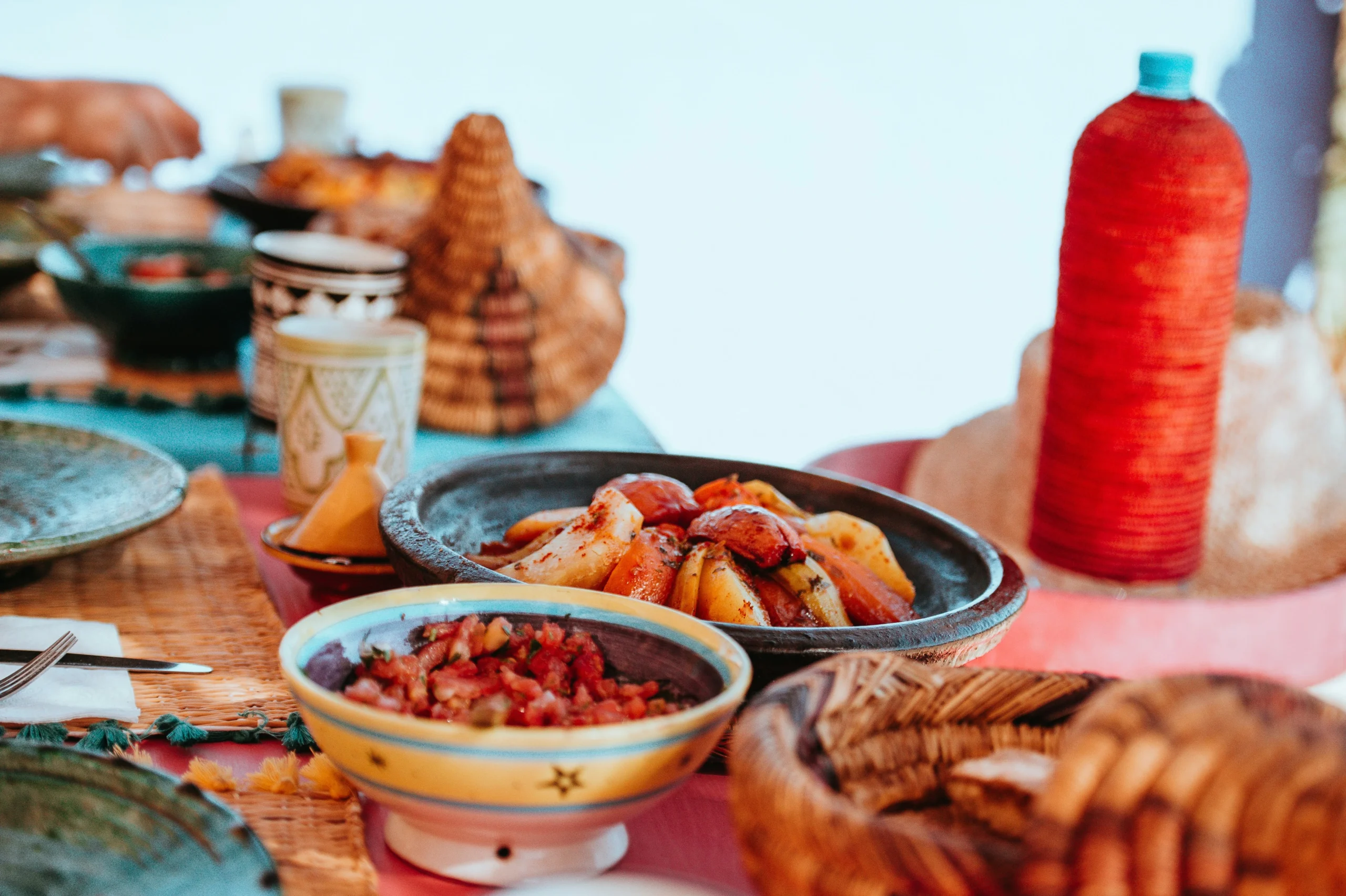
Grilled meats and fish, eggs, and slow-cooked tagines deliver the protein your muscles need to recover, cooked simply rather than drowned in heavy sauces.
-
Vegetables at the centre, not the side
Moroccan cooking treats vegetables as a main event — stews, salads and sides packed with the micronutrients that keep you resilient through a hard week.
-
Spices that earn their place
Ginger, turmeric, cumin and garlic aren’t just flavour — several carry anti-inflammatory reputations that pair well with a body under training load.
The reframe:
A training week doesn’t have to mean a cleanse. Eat fresh, whole Moroccan food — grilled protein, real carbs, plenty of vegetables — and you fuel performance and enjoy every meal. Depriving yourself is what wrecks a training trip; nourishing yourself is what makes it work.
A day of eating to train
| When | What works |
|---|---|
| Before training | Something light with real carbs — bread, fruit, a little protein. Enough to fuel the session without sitting heavy. |
| After training | Protein plus carbs to kick off recovery — grilled meat or fish with couscous or rice, and vegetables. |
| Main meals | A proper tagine or grilled plate: protein, vegetables, a carb base. Balanced without counting a thing. |
| Throughout | Fruit, nuts and plenty of water — and Morocco’s famous mint tea to sit around after. Hydration matters in the warmth. |
Fresh food, on your terms
The point of eating well on a training trip isn’t rigid meal plans — it’s having good, fresh food available when you’re hungry, cooked simply, that happens to fuel you properly. At Life Resort Marrakech, fresh food and dining are part of that rhythm: eat after a session, settle into a long dinner, refuel and recover. When the food is this good, eating for performance stops feeling like discipline and starts feeling like the best part of the day.
And recovery doesn’t stop at the table. Pairing good food with proper rest, mobility and time at the spa gives your body the space it needs to be ready for the next session.
Frequently asked questions
Do I have to follow a strict diet to train well on holiday?
No. Eating fresh, whole foods — protein, real carbs, plenty of vegetables — covers most of what training needs. Simple and consistent beats strict and joyless.
Is Moroccan food good for athletes?
It’s well suited to it: lean grilled proteins, slow-cooked stews, real carbohydrates like couscous, and vegetable-forward dishes give you the fuel and recovery support hard training demands.
Can you cater to specific dietary needs?
Fresh food for training days and slower ones is part of the rhythm here, with optional chef and catering for private stays and groups. Let us know your needs and we’ll work with them.
What about eating vegetarian or plant-based while training?
Very doable — Moroccan cuisine is rich in vegetable, legume and grain dishes, so plant-based eaters can fuel training well. Flag it ahead and we’ll plan around it.
How important is hydration when training in Marrakech?
Very — the warm, dry climate means you lose more fluid than you might at home. Drink consistently through the day, not just at sessions, and lean on fruit and water alongside meals.